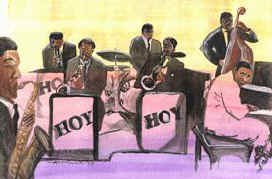
Jazz - A music that depends
primarily on improvisation and reflects a long tradition of changing ideas of structure,
freedom and swing. The first music known as jazz was the New Orleans style
("Dixieland"), in which a small group would improvise collectively on a well
known tune. in the Twenties trumpeter Louis Armstrong and others began to separate the
soloists from the accompaniment, each permitted different degrees of freedom -an idea that
ruled jazz for the next few decades through the harmonic and rhythmic revolutions of the
big bands of the Thirties swing era, (Duke Ellington, Fletcher Henderson, Benny Goodman),
bee-bop in the late Forties (Charlie Parker, Dizzy Gillespie) and "cool" and
hard bop and modal playing in the Fifties (Miles Davis, Thelonius Monk)
What is Jazz?
Rhythm and Blues - Rhythm
and Blues is a descriptive term that has never had a clear single meaning. In it's
broadest sense, R&B denotes black pop music. However, as black pop music changes, it
has become a term that is often defined by whatever black musical style it is attached to
at a given point in time, rather than the other way around.
In the beginning it was a renaming of "race" music. and later gave way to soul,
funk, disco and simply "black" styles. small rhythm and blues combos revved up
Tin Pan Alley pop tunes with rhythms derived from swing jazz and vocals reflecting the
blues. They linked the big band jump blues of the Forties with early rock and roll. Early
rock and roll hits were often covers by white singers of R&B hits, like Elvis
Presley's version of Roy Brown's "Good Rockin' Tonight" or Bill Haley and His
Comets cleaned-up take on Big Joe Turner's "Shake, Rattle and Roll."
Influences courtesy Rolling Stone's "Encyclopedia of Rock and Roll."