Payola
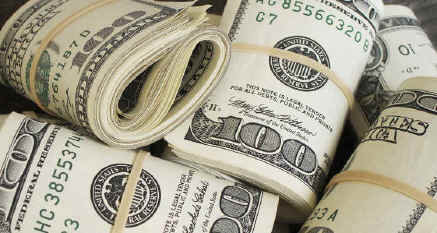
The term "payola" was coined by Variety in
1938 to refer to gifts, favors or cash surreptitiously dispensed
by record companies to get orchestra leaders and disc
jockeys to play their songs. Payola - The paying of cash or
gifts in exchange for airplay.
"Payola" is a contraction of the words
"pay" and "Victrola" (LP record player), and
entered the English language via the record business.
The use of financial and other illegal
inducements went all the way back to 1880s. They were used by
publishers to entice popular singers to perform their songs. It
soon became part of the plugging game. Over the years some
controls were instituted, but none were effective, since those
expressing outrage were mist often responsible for and dependent
on it.
The composer of "Tenting Tonight On the Old
Campground"gave the leader of the Hutchison Singing Family
a share of the songs royalities so they would sing it at
their concerts. Victorian England songwriter Arthur Sullivan gave
singer Sir Charles Santley a share of the song's royalties to
sing it. Later Sullivan with William Gilbert would pay large sums
of money to influential performers to perform Gilbert-Sullivan
compositions. This technique would become known as song plugging.
The term payola first used in 1916 by Variety
in a front page editorial condemning the practice calling
it "direct payment evil."
Al Jolson was persuaded to record some songs only
after was given royalties in the vaudeville era, a time when the
MPPA fought against it, but couldn't stop it, payola.
Billboard stated payola was rampant
during vaudeville of the 20s, and the big band era of the 1930s
and 1940s.
"The cancer of payola cannot be pinned
on rock and roll."
Billboard Magazine.
In at least two instances there was record of
ASCAP"s direct involvement in payola. During the thirties
Harry Richman and Paul Whiteman both received financial tribute
from ASCAP to pay certain songs. in 1938, the Federal Trade
Commission notified ASCAP that payola was a form of bribery and
was unethical. the FCC pressured ASCAP to come out publicly
against payola and advise its members to stop. ASCAP told its
members to stop, but had no effect.
Payola had a long history in music, predating
both rock and roll and independent record companies. Legislative
Hearings. Perfected by the big publishing companies, payola was
widely accepted as a more or less legitimate form of promotion.
ASCAP protested BMI's sponsoring disc jockey publishing ventures
as a refined form of payola.
1940s Variety and Billboard pop charts were
used as a measure of successful music promotion. their
seeming objectively was laden with controls that made them tools
of large publishers and record companies. They were made up of
not just sales, but of subjective reports from sampling stores,
radio stations and jukebox operators. Music producers used
incentives ranging from discounts to bribes to entice retailers
to over-report sales and plays to achieve higher chart position.
Using these techniques were called vote gathering. With higher
chart positions other broadcasters began playing records,
consumers bought the record resulting in hits. When disc jockeys
became key record companies wooed them by any means
Increased competition tempted many to resort to bribery to
access the market. In 1942 Music Publisher's Contact Employees
Association wanted to end this. Offered a $500 War Bond for
information on anyone offering or accepting payola. When no
charges were made Music Publishers Contact Employees Association
president Johnny O'Connor declared payola dead, ignoring the fact
that the incentive to perform greater than report. Two years
later wrote stricter rules to check growth this too had little
effect more charges and useless responses.
National Association of Broadcasters tried to deal with the
problem by limiting the number of songs individual publishers
could have performed on the air and bandleaders, singers and
programmers could play. No more than fifteen per hundred
performances with the remaining eighty-five from at least
seventy other publishers. It never went into effect. In
1944 Warner Brothers threatened to sue against the sponsor of Your
Hit Parade, charging the method of selecting songs was
illegitimate, arbitrary and often discriminatory. Since
performance increased demand for sheet music and records it was
very important in breaking hits. If a was quickly dropped
cancellation of orders poured. The producers claim the
selections based on popularity, determined from record and sheet
music sales and network radio play. Warner's suit ended up going
nowhere.
In the early 50s music industry publications warned record
companies and radio stations that if they did not clean house
they would face a crisis of public confidence and possible
government regulation. Variety said payola was a
'Frankenstein" rampant in rhythm and blues and country
music. a normal operating expense for independents, payola forced
the majors to make deals with disc jockeys "to unload their
merchandise." cash boc called for a moratorium and
prosecution for anyone that betrayed the public trust.
A few stations took steps to restrict payola. In 1952 WMFS
distributed a booklet to its employees calling payola a
"monster" and promising any disk jockey who took it
would be fired. Also DJs were not to mention names of record
companies of the records or expressing their opinions about them:
"the audience is not interested whether it is Capitol,
Decca, Columbia or Victor release. It is interested in the
selection and the artist."
The first court case involving payola was in 1960. On May 9,
Alan Freed was indicted for accepting $2,500 which he claimed was
a token of gratitude and did not affect airplay. He paid a small
fine and was released. His career faltered and in 1965 he drank
himself to death.
Efforts to eliminate payola were half-hearted and ineffective.
Record companies came to accept it as a cost of doing business.
many saw it as a victimless crime having having little or no
impact on consumer choice.
After the U.S. House Oversight Oversight Committee
hearings ended the committee wrote a bill making payola a
federal offense, prohibited quiz frauds and set fines of up to
$10,000, imprisonment for up to one year, or both for
broadcasters who "willfully or repeatedly" violated the
Communications Statute or FCC rules. The FTC outlawed payola as
unfair competition and the IRS declared that the companies that
engaged in payola had committed bribery and the payments weren't
deductible as business expenses. The bill was signed into law in
September.